Bedrock Energy Corp.
Open House July 25th – FAQ

Open House July 25th
- FAQ -
Thank you to the Municipality of Bluewater for your active participation in this project! Answers to your most frequently asked questions, posed following this meeting, can be found below.
HOW DOES THIS WORK?
Is this a proven technology? Where else in the world has CAES been implemented?
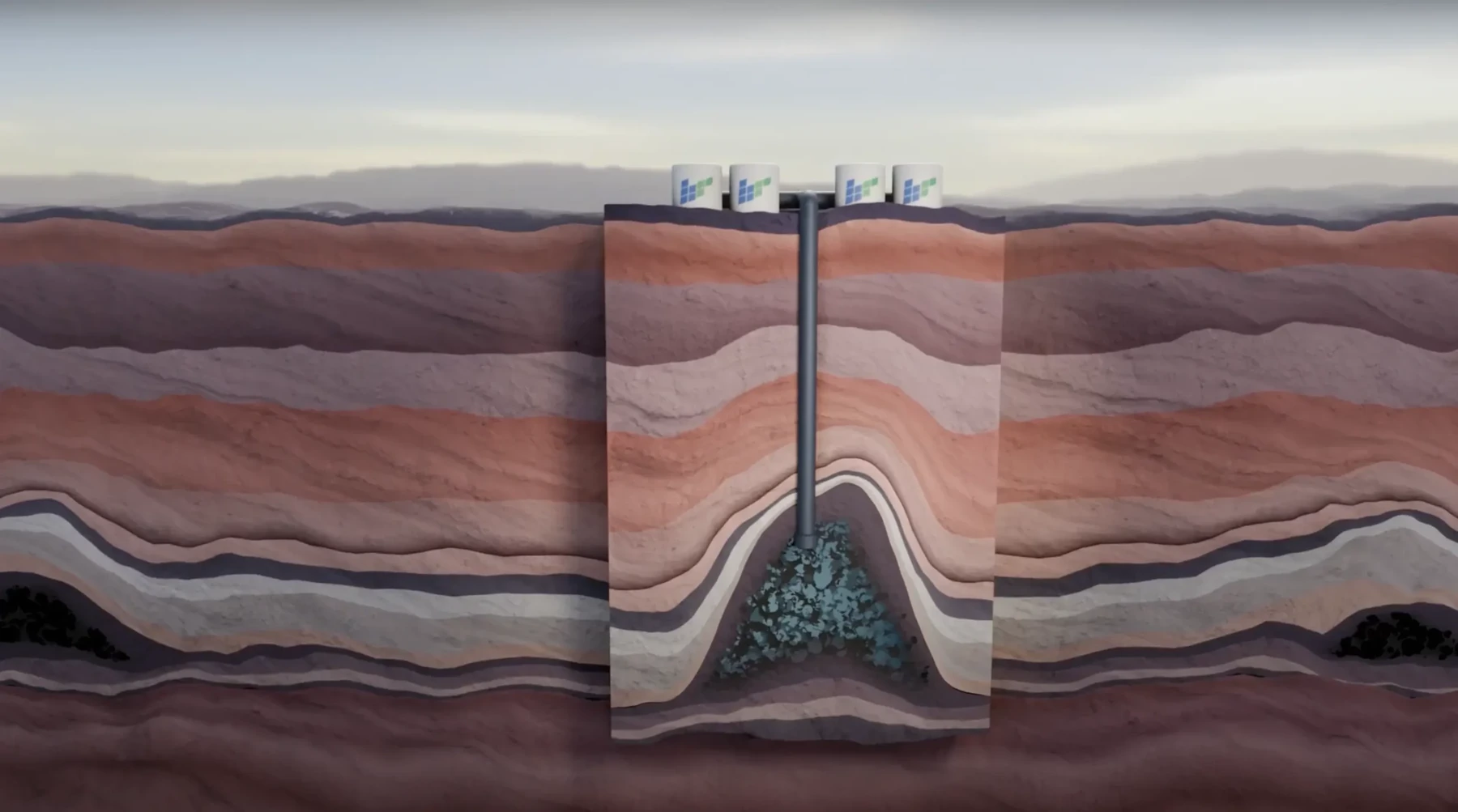
Indeed, CAES is a validated technology, with two operational plants that have been functioning successfully for many years. Further details about the Alabama CAES facility are available through the provided links:
McIntosh Power Plant – Compressed Air Energy Storage System, US (power-technology.com)
Compressed air energy storage technology: Generating electricity out of thin air | Baldwin EMC
Is this like fracking? Will the compressed air frack the underground rock?
No, Bedrock facility’s operations are not at all like fracking; to the contrary, Bedrock’s development takes a very careful, preservation approach to the development of the rock reservoirs. This will ensure that there is no activity which carn harm the natural rock characteristics so as not to disturb the special geological features of this subterranean container. CAES versus fracking are very distinct processes with different purposes, objectives and impacts on seismic activity. There will be no fracking whatsoever used with the development or ongoing operations with the Bedrock project. Fracking is used in oil and gas extraction to break rock; Bedrock will preserve the rock’s integrity while developing the internal capacity porosity.
How hot will the compressed air be?
Foreseen to exceed 300 degrees Celsius, the compressed air is expected to undergo cooling through a thermal energy storage loop. Within this loop, the heat resulting from compression will be transferred to a heat storage medium, consequently reducing the temperature to approximately 50 degrees Celsius. This cooled air will subsequently be injected into the reservoir as part of the operational process.
How much pressure will the CAES system contain? Is it possible that it could explode?
The CAES system’s operational pressures are designed to reach up to 1200 psi. This value encompasses safety factors essential for equipment design, making the effective operational pressure even higher than 1200 psi. To trigger an explosion, both a fuel source and ignition are necessary. Our extensive modeling analyses have indicated that we remain significantly below the Lower Explosive Limit (LEL) of methane required for ignition. As a result, the likelihood of an explosion is exceedingly remote. As part of the requirements with the Ministry of Natrual Resources and Forestry, the limits will be held below their maximum allowable limits, with regular monitoring in place.
This has never been done in rock before, how do you know it will work?
Extensive research, engineering analyses, and feasibility studies have been conducted to substantiate the viability of this undertaking. Our team has thoroughly evaluated geological conditions, engineering principles, and technological advancements to formulate a robust plan. This builds off of a previous project proposal for the site, which would have seen natural gas storage, as opposed to compressed air; that project was given leave to construct by the OEB, meaning the reservoirs and proposed usage had been thoroughly vetted. Additionally, lessons learned from similar projects, even if not precisely identical, have contributed to refining our approach. These comprehensive preparations instill confidence that the project is well-informed and well-prepared for its execution.
Why does this have to be here; why can't you build this somewhere else?
One of the remarkable aspects for choosing this location is the unique geology of these reservoirs located in the Municipality of Bluewater, Ontario. The natural occurrence of porous rock formations in this region, immediately adjacent to an existing 500kV Hydro One transmission line, has presented us with an unparalleled opportunity to repurpose two former natural gas reservoirs for CAES operations.
To quantify this: the project allows us to leverage the existing subsurface infrastructure and create a storage project with the capacity to supply power for 8 hours to approximately 624,000 homes – that is all the homes in London, Waterloo and Hamilton. In emergency situations, this project can run for over 3 days at 75 MW.
What happens if you realize the technology doesn't work?
With our project’s anticipated completion date in 2027/2028, it is important to proactively address the potential for technology evolution. The fast-paced nature of technological advancements necessitates a robust contingency plan, and while Bedrock does not foresee any major evolution that has a potential to render the project obsolete, we have however included the following in our consideration.
Adaptive Design: Our project is designed in modular components that come together to form the CAES operation. This will allow us easy upgrades or replacements if new technology readily becomes available. This forward-thinking approach ensures that our project can keep up with advancements without requiring major overhauls.
Strategic Partnerships: Bedrock has been working on forging strategic partnerships with technology providers, and industry experts who are at the forefront of CAES technology development. By establishing these collaborations, we gain access to cutting-edge advancements, early insights into emerging technologies, and potential upgrade options.
Regulatory Alignment: Bedrock keeps abreast of evolving regulations and policies that support the adoption of advanced technologies in the energy sector. This allows us to understand the direction of future requirements and ensure that our project aligns with these standards.
What is the expertise within Bedrock to have the knowledge and experience to develop this project?
Bedrock was one of only a handful of companies that qualified for the IESO Request for Qualifications for large-scale, long duration energy storage. In order to qualify, Bedrock had to demonstrate that its team had the necessary and recent experience in: Engineering/Design, Construction, Operation, and Financing. Our leadership team comprises of former executives of Enbridge, Chevron, former CEO of Hydro One, with decades of experience driving this project forward. Bedrock is proud of its internal expertise at the executive level right across to its entire team. We have been very thoughtful over the 6 years of operations, to select, hire and create a board of directors that have a wide range and solid depth of experience. The result of this selection, Bedrock is comprised of industry experts with many combined years of experience in the energy industry. We encourage the community to review the board of directors and staff bios on the Bedrock website, and to please reach out with further questions.
Who is paying for this project?
The costs for building this project will be paid for by private investment and recovered through project revenues over 40 years, not paid for by subsidies from governments.
Who are the investors behind Bedrock? Will investors in China or the US be profiting from this project?
Bedrock is a small privately held Ontario based organization. Accordingly, we are not at liberty to disclose the identities of our investors. However, details of our board of directors can be found on our website.
Do you have all the approvals from the landowners?
The ongoing support of the landowners to date has been appreciated. For the reservoir and topside lands, all landowners (11 landowners) are in agreement of the project, with signed option agreements for the land/reservoirs in place. The landowners on the proposed route for the air pipeline are currently in the Committee negotiation stage, as we work through those details.
What happens if you do not get approval, will you sell the land?
Bedrock will have a guaranteed buyer for the energy from the project well before any construction commences. If Bedrock does not eventually obtain its approvals, the options on the land would lapse and the development would not proceed in its current configuration, with the land remaining with its landowners.
Who will be the customer of the power generated?
How will you hire 800 people to build this facility when we can't find anyone to hire in Bluewater/the region?
The successful execution of the project mandates a specific skill pool encompassing roles such as generator, transformer, substation, and HVAC technicians, as well as drillers, cementers, and various others. These specialized proficiencies will be strategically deployed by the construction entity across the diverse phases of development. Consequently, the acquisition of these skillsets could potentially involve local sourcing contingent upon availability, or alternatively, the construction vendor might choose to mobilize their experienced teams from other operational sites.
Where will these 800 people live while building the facility?
Depending on the workforce’s origin—whether local or from outside Bluewater—the construction entity has several housing options to contemplate. Typically observed in substantial construction endeavors, like Bedrock’s proposed CAES facility, the construction entity often arranges temporary accommodations on-site to minimize disruptions to local housing. Bedrock is well-aware of the concerns expressed by many residents during the open house and can relay these considerations to the construction entity. This feedback could be instrumental when the construction entity seeks suitable lodging arrangements for their workforce.
How loud will the facility be? Will this be as loud as the wind turbines nearby?
Bedrock will always be sound compliant, operating at all times within the Ontario regulatory requirements. We anticipate that sounds at the fence line will be between the governing 30 – 40db limit at night, which is essentially the level of a quiet conversation or leaves rusting in the breeze, and likely similar during the day when the compression is not running. These numbers will be confirmed and tested as the equipment and design progresses.
Will we be able to continue to use the access road?
We are unsure of what is meant by use of (which) access road, however, in order to safely access both the HONI station and the Bedrock site, an access road off Goshen Line at a safe location (visible) is required. In order to minimize the disruption to farmland, Bedrock has approached the Municipality with taking over the use of the unopened road allowance of Blue Bluff Road, east of Goshen Line. This is not a finalized plan, but one that we hope can be worked out with the Municipality to reach a workable agreement. If this road cannot be used, Bedrock will create an alternative access road for HONI to the north of the site, and one further south for Bedrock’s topside equipment site.
How will ambulances or emergency services access the site?
In accordance with the stipulated guidelines and regulations necessary for site plan approval, the project site is mandated to have designated access points specifically designated for emergency vehicles. These access routes will be established to facilitate emergency service entry during both the construction phase and subsequent operational periods of the facility.
Will Bedrock cover the cost of any damaged road that could happen during the construction process?
Yes, Bedrock will cover the costs of damaged roads, if any, that might occur during the construction process. We are committed to collaborating closely with the Municipality of Bluewater throughout the construction phase. As part of this collaboration, Bedrock will be fixing and repaving as necessary, the road and shoulders, once construction concludes, ensuring that any potential road damage incurred during the construction process is appropriately and fully addressed – at no cost to the municipality, road-users or taxpayers.
Will this impact the community's aquifer? Will there be any impact on the water table?
No. Bedrock’s engineers do not believe that there is any risk posed to drinking water sources due to or caused by its project. Each drilled air well will be designed and constructed to isolate the drinking water aquifer so there can be no contact or any interaction whatsoever between the air wells and the water aquifer through multiple steel casing strings, each separated by specialized cement. Regardless, Bedrock will be engaging Stantec to conduct a full-scale pre-construction water testing and monitoring program, which will continue during construction and past the commencement of operations. This is very important to Bedrock to ensure uninterrupted clean water availability at all times, and for greater certainty, Bedrock carries insurance to ensure this commitment.
Will there be a leak in the pipeline? If there's a leak, what will happen?
No leaks are anticipated from the air pipeline. The pipeline is constructed to CSA stringent engineering standards with 24/7 corrosion protection to minimize any possibility of leaks, and reviewed and inspected by TSSA. However, in the unlikely event of a leak, several safety measures are in place. Sensors continuously monitor the pipeline, swiftly detecting any anomalies. If a leak is detected, the system can be shut down promptly to isolate the affected area. Additionally, isolation valves and emergency response protocols are in place to prevent any potential adverse effects on the surrounding environment and community.
What's in this for me? What benefit will the community receive from Bedrock?
The CAES project brings numerous benefits to the community of Bluewater and the broader region. During the construction and commissioning phase, over 800 jobs will be created, providing employment opportunities and stimulating the local economy. Once operational, the project will sustain approximately 40 full-time jobs, ensuring ongoing employment and stability for the community.
Furthermore, the CAES project contributes to the revenues of Bluewater, enhancing the municipality’s financial resources for community development and improvement initiatives. Through a dedicated community benefit plan, the project provides ongoing support to the Municipality of Bluewater and its residents, fostering long-term collaboration and partnership.
By meeting the increasing energy needs of Ontario, the CAES project plays a vital role in ensuring a reliable and sustainable energy supply. As population growth and load demands continue to rise, the project contributes to the stability and resilience of the provincial power grid.
In addition to its economic and energy benefits, the CAES project stands as an environmentally friendly endeavor. With no emissions and a minimal footprint, it aligns with green energy goals and promotes a cleaner and healthier environment for the community and future generations.
Will you be dumping in the Bayfield River?
No, there will be no dumping in the Bayfield river, the watershed of which will always remain fully protected.
Will the CAES system increase the temperature of the air in the community?
The intended CAES facility is conceptualized as a closed system, ensuring that any heat produced during the compression phase will be stored prior to injecting the air into the reservoir. This stored heat will then be utilized to reheat the air when it is extracted, just before it passes through the turbines for power generation. As a result, the facility’s operation will not contribute to an increase in the ambient air temperature within the community.

Get in touch
Talk to Bedrock
Landowner, municipality, supplier or press — tell us who you are and we'll route you to the right person.
Contact us